
Uncover the hidden habits and beliefs shaping your financial destiny.


Exploring the 10 Money Archetypes
In the complex world of personal finance, understanding your money management style is key to navigating your financial journey more effectively. Each of us tends to embody a specific archetype that influences our financial decisions and strategies. From the cautious Saver to the ambitious Empire Builder, these archetypes reveal our underlying attitudes towards money and can guide us in achieving better financial harmony. In this article, we will delve into the 10 money archetypes, exploring their unique characteristics, strengths, and challenges.
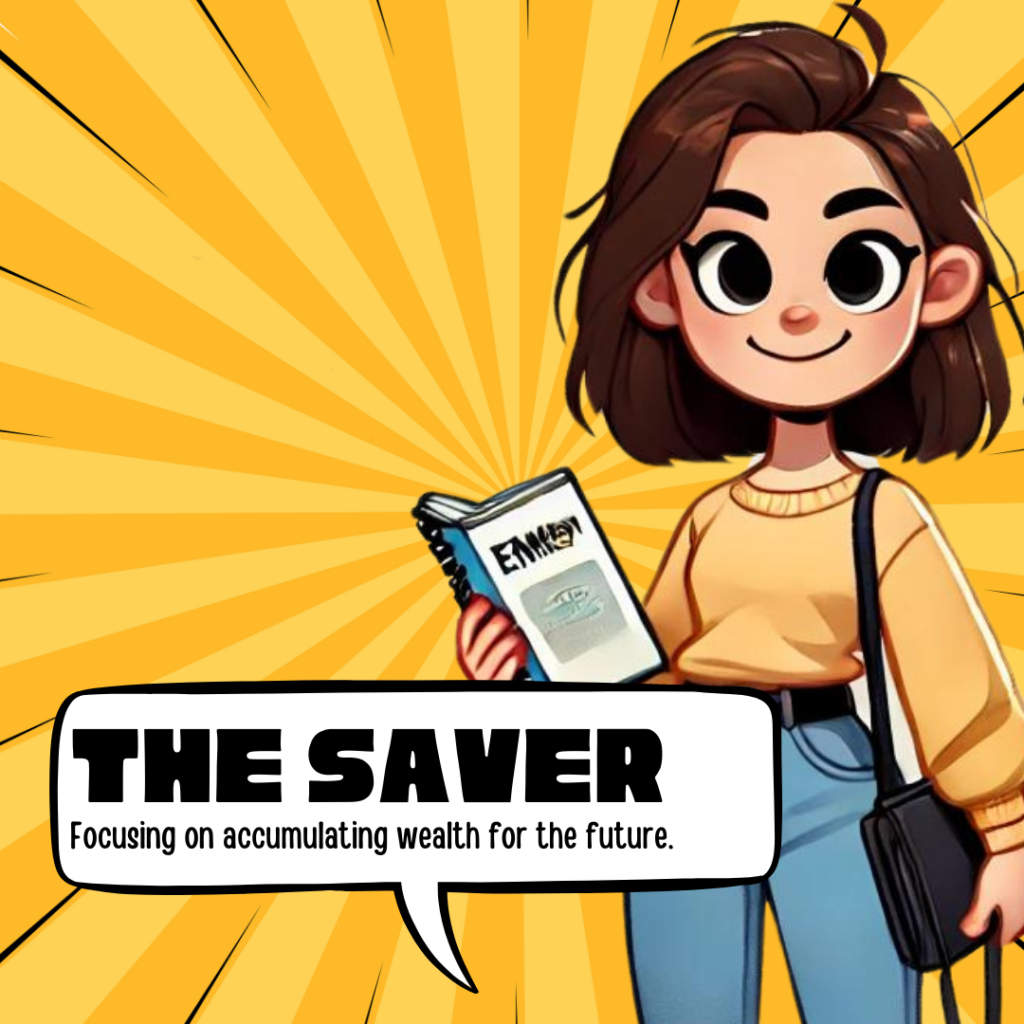
1. The Saver
The Saver archetype prioritises financial security above all else, often focusing on accumulating wealth for the future. They are highly disciplined with money, frequently setting aside a significant portion of their income into savings or investment accounts. Savers are cautious with expenditures, always searching for ways to minimise costs and maximise savings.
Example
Emma keeps a meticulous budget, tracking every expense. She contributes regularly to her retirement account and has an emergency fund that covers six months of living expenses. Emma prefers cooking at home rather than dining out and often shops with coupons.
Positive Side
- Financial Stability: Savers often achieve financial independence earlier due to their disciplined approach.
- Preparedness: They are well-prepared for unexpected expenses or economic downturns.
- Compounding Benefits: Early and consistent saving allows them to benefit from compound interest over time.
Negative Side:
- Missed Experiences: Sometimes, excessive frugality can lead to missing out on life experiences.
- Stress: Constant worry about saving enough can lead to stress and anxiety.
- Social Isolation: May avoid social outings to save money, impacting relationships.
2. The Spender
The Spender archetype finds joy in acquiring new experiences and material goods. They are not afraid to spend money to enhance their lifestyle, often prioritising immediate gratification over long-term savings. Spenders are usually the first to try new trends, travel to new places, and indulge in life’s pleasures.
Example:
Jack loves the latest tech gadgets and doesn’t hesitate to buy the newest smartphone each year. He enjoys dining at upscale restaurants and travels frequently, often planning his next vacation while on the current one.
Positive Side:
- Rich Experiences: Spenders often have fulfilling lives filled with rich experiences and personal gratification.
- Social Connections: Their willingness to spend on social occasions can lead to strong personal and professional networks.
- Stimulating Economy: Their spending habits can contribute positively to economic activity.
Negative Side:
- Financial Vulnerability: Tendency to spend can lead to financial instability and inadequate savings for emergencies or retirement.
- Impulse Buying: May struggle with impulse control, leading to regrettable purchases.
- Debt Risk: High spending can often result in accumulated debts, which can become unmanageable.
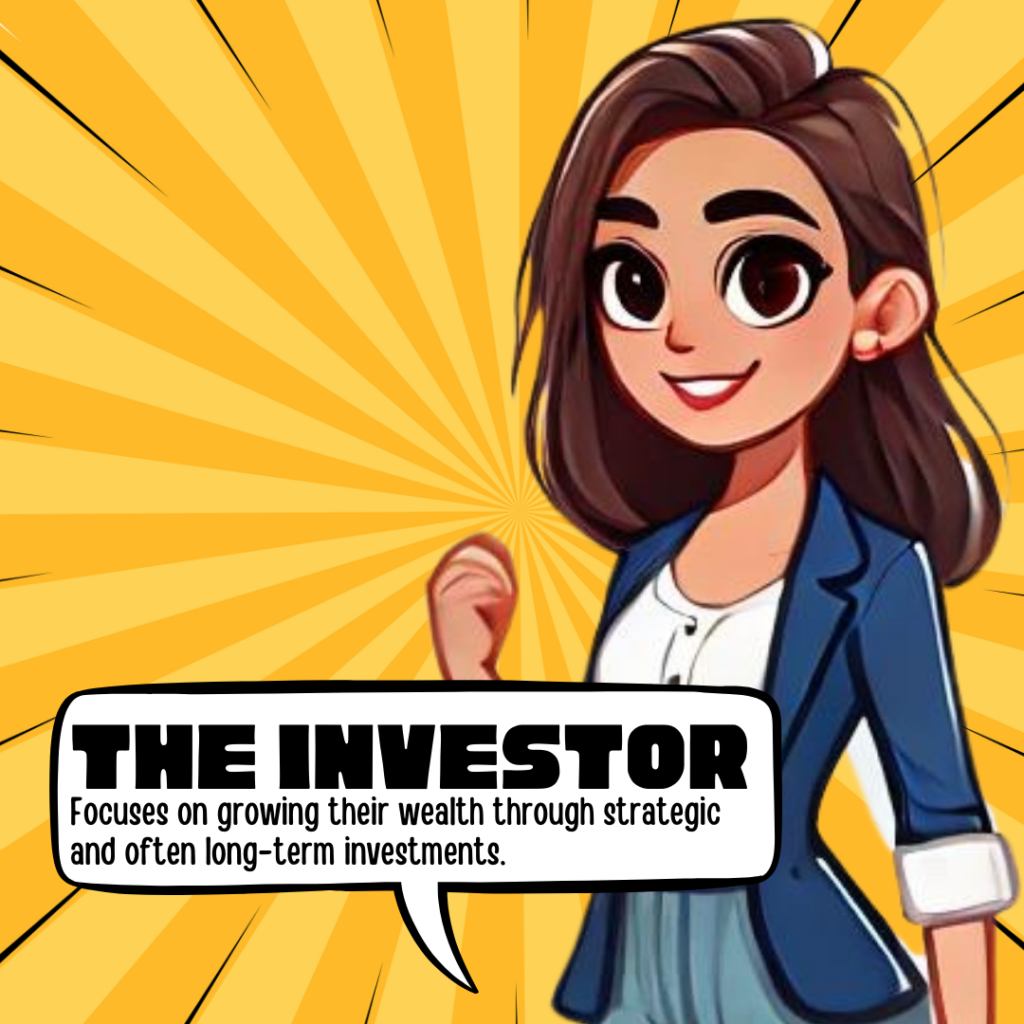
3. The Investor
The Investor archetype focuses on growing their wealth through strategic and often long-term investments. They are knowledgeable about financial markets or willing to learn, and they make calculated decisions to optimise returns. Investors are not just limited to stocks and bonds; they may also invest in real estate, businesses, or other assets that promise growth over time.
Example:
Samantha regularly allocates money to her diversified investment portfolio, which includes mutual funds, stocks, and a rental property. She keeps herself updated on market trends and adjusts her investments based on sound financial advice and her own research.
Positive Side:
- Wealth Accumulation: Effective investing strategies often lead to substantial wealth accumulation.
- Financial Acumen: Investors gain significant knowledge of financial markets and economic principles, enhancing their decision-making skills.
- Passive Income: Investments can generate passive income, contributing to financial freedom.
Negative Side:
- Market Risk: Investments are subject to market fluctuations, which can lead to financial loss.
- Complexity: Keeping up with market trends and managing investments can be complex and time-consuming.
- Emotional Stress: The ups and downs of investment markets can cause significant emotional stress.
4. The Gambler
The Gambler archetype is characterised by a high-risk, high-reward approach to money. They often make financial decisions based on intuition or the thrill of the gamble, rather than careful analysis. This archetype doesn’t shy away from speculative investments, betting, or other financial ventures where there’s a significant chance of losing money in hopes of a large payoff.
Example:
Tom regularly participates in high-stakes poker games and invests in volatile stocks or cryptocurrencies on a whim, hoping for a quick and substantial return. His financial decisions are driven by the excitement of potential wins rather than the practicalities of steady growth.
Positive Side:
- Potential for High Returns: Gamblers can experience significant financial gains if their risky bets pay off.
- Excitement and Thrill: The thrill of taking risks can provide personal satisfaction and excitement.
- Learning from Failures: Gamblers often learn to handle losses and develop resilience.
Negative Side:
- Potential for Large Losses: High-risk behaviours can lead to substantial financial losses.
- Financial Instability: The unpredictable nature of their financial decisions can lead to a lack of financial stability.
- Addiction Risks: Gambling with money can lead to addictive behaviours and impact mental health.
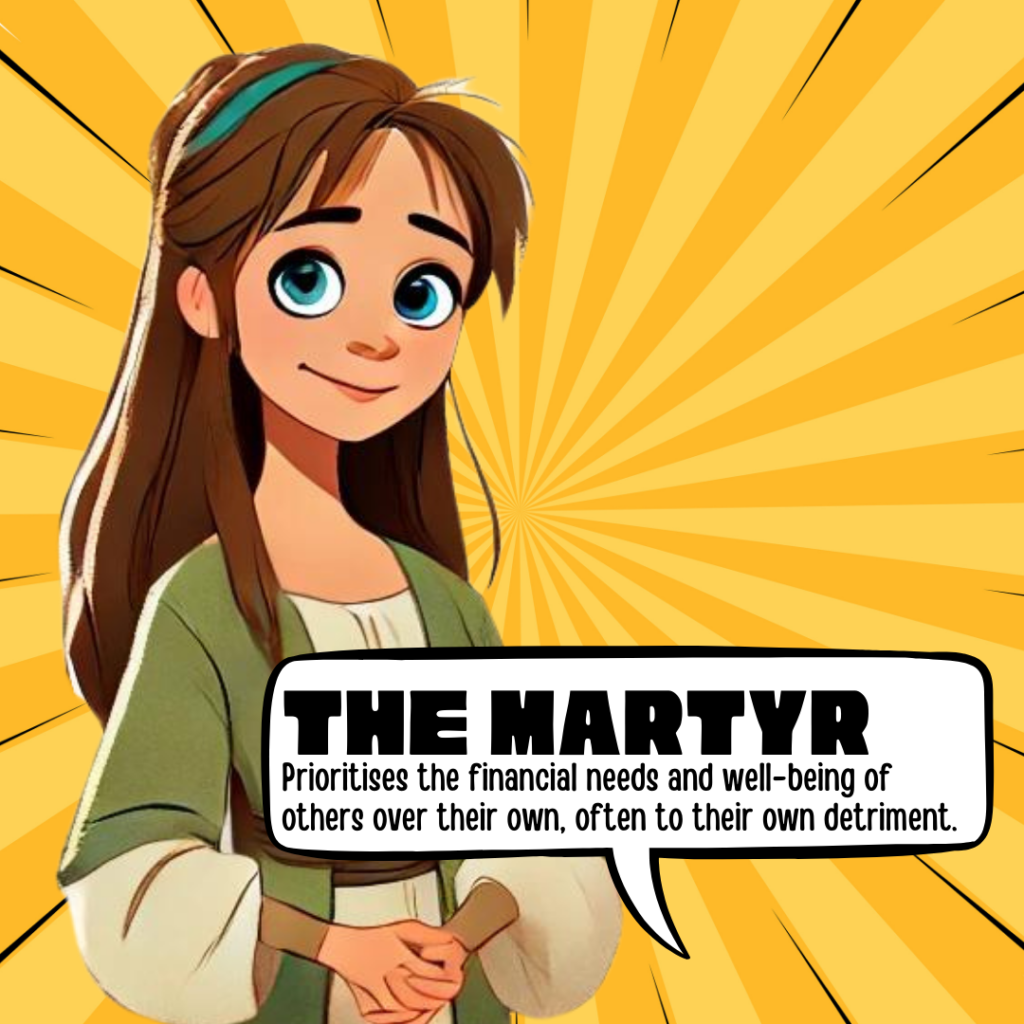
5. The Martyr
The Martyr archetype prioritises the financial needs and well-being of others over their own, often to their own detriment. They may frequently lend or give money away, even when it compromises their financial stability. Martyrs feel a strong sense of duty or responsibility to support others, which can stem from deep-seated emotional or cultural reasons.
Example:
Lisa often helps her family members financially, paying for her siblings’ education and covering medical bills for relatives. Despite her generous nature, she struggles to save enough for her retirement and often postpones her own financial goals.
Positive Side:
- Generosity: Martyrs are highly generous, often providing substantial support to family and friends in need.
- Emotional Satisfaction: Their actions provide a deep sense of fulfilment and purpose, knowing they are helping others.
- Strong Relationships: Their generosity often strengthens relationships with those they help.
Negative Side:
- Personal Financial Risk: Their focus on others’ needs can jeopardise their financial security.
- Dependency Creation: Constant financial support may lead to dependency among those they help, stifling their financial independence.
- Neglect of Personal Goals: Martyrs may sacrifice their own financial goals, such as saving for retirement or investing in personal growth.
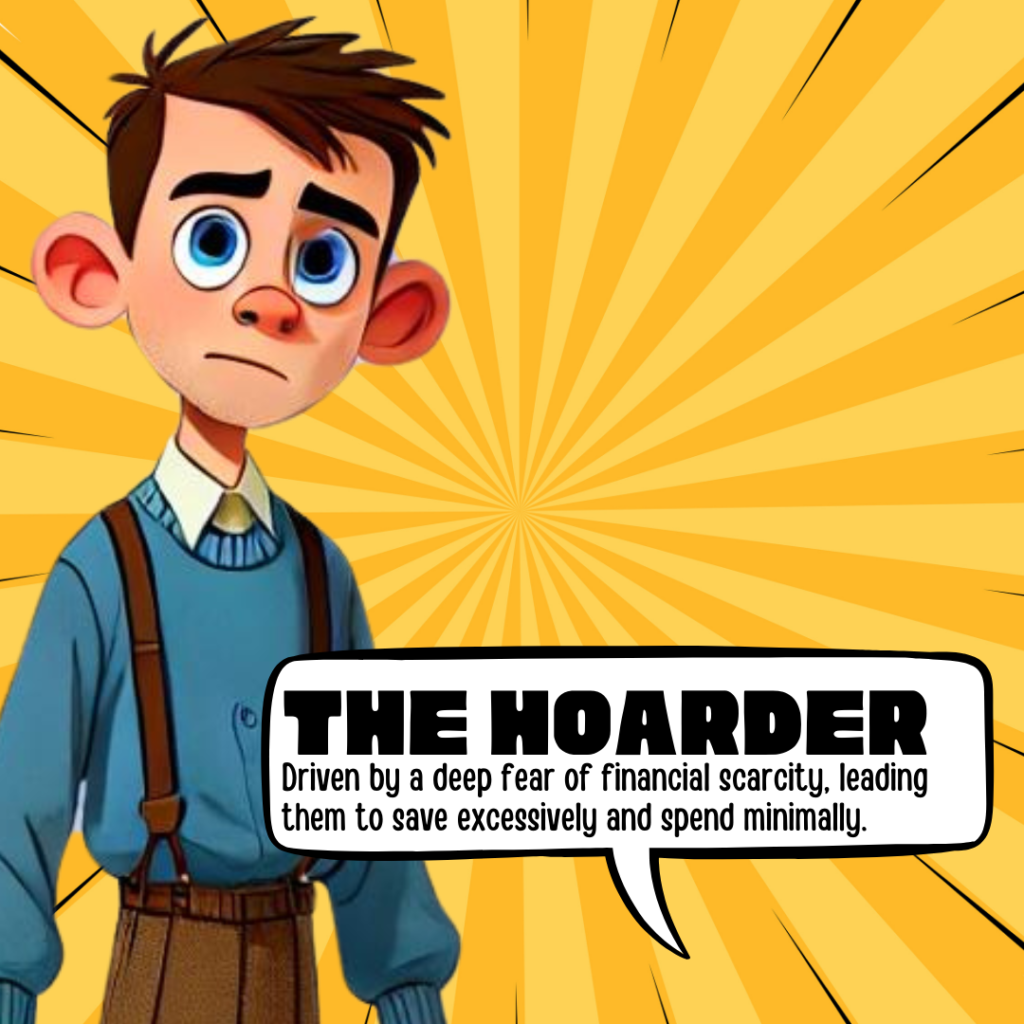
6. The Hoarder
The Hoarder archetype is driven by a deep fear of financial scarcity, leading them to save excessively and spend minimally. Hoarders may have experienced financial hardship in the past or been influenced by familial attitudes towards money. They find comfort in having a large buffer of funds and often resist spending money on even necessary or beneficial items.
Example:
Michael has a substantial amount of money saved up, but he lives a frugal lifestyle, rarely updating his old car or home. He avoids taking vacations and is anxious about making any significant purchases, even when necessary.
Positive Side:
- Financial Security: Hoarders often have significant savings, providing a strong financial safety net.
- Preparedness for Emergencies: Their substantial savings ensure they are well-prepared for unexpected financial emergencies.
- Low Debt Levels: They typically avoid debt, reducing financial stress related to liabilities.
Negative Side:
- Missed Opportunities: Hoarders may miss out on experiences and investments that could improve their quality of life.
- Social Isolation: Their reluctance to spend can affect social relationships and personal enjoyment.
- Anxiety over Finances: The constant worry about running out of money can lead to significant anxiety and prevent them from enjoying their wealth.
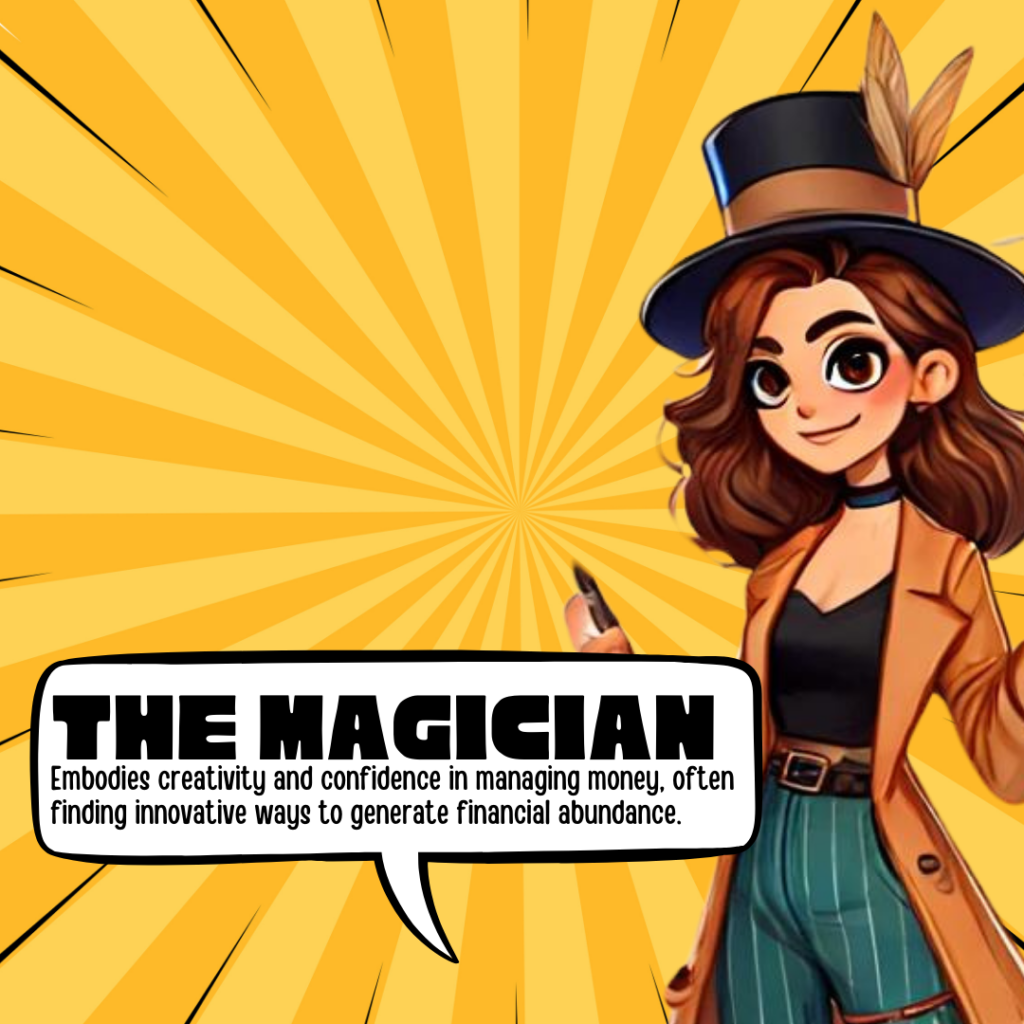
7. The Magician
The Magician archetype embodies creativity and confidence in managing money, often finding innovative ways to generate financial abundance. Magicians are not afraid to take calculated risks and believe strongly in their ability to create wealth through various ventures or creative endeavours. They often have multiple streams of income and can adapt quickly to changing economic landscapes.
Example:
Ava runs a successful online boutique, freelance graphic design business, and occasionally flips real estate for profit. She has a knack for spotting opportunities and transforming ideas into lucrative ventures, consistently seeking new ways to diversify her income.
Positive Side:
- Innovative Financial Strategies: Magicians are adept at identifying and exploiting new opportunities for income.
- Adaptability: They can quickly adjust their financial strategies in response to changing circumstances.
- Wealth Creation: Often achieve significant financial success through their entrepreneurial and creative efforts.
Negative Side:
- Risk Exposure: Their willingness to try new things can expose them to financial risks.
- Inconsistency in Income: The varied nature of their endeavours might lead to fluctuating income levels.
- Overextension: In their quest for new opportunities, they may spread themselves too thin, impacting their overall financial health.
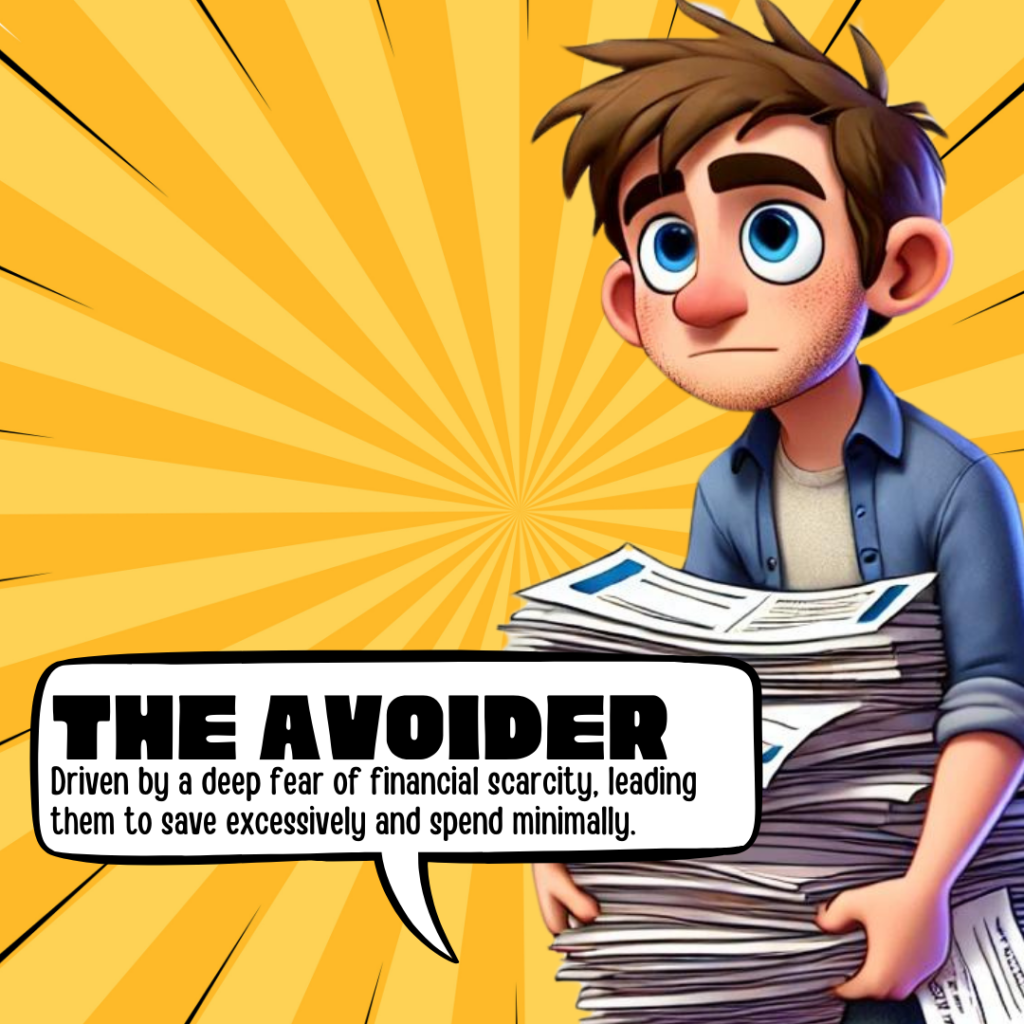
8. The Avoider
The Avoider archetype tends to shy away from financial responsibilities and decisions, often due to discomfort, lack of confidence, or a simple disinterest in financial management. Avoiders may procrastinate on paying bills, neglect to monitor their bank accounts, or fail to plan for the future, which can lead to accumulated debts and financial crises.
Example:
Ben has several unopened bank statements piling up and rarely checks his account balances. He feels overwhelmed by the thought of budgeting and has put off planning for retirement, leading to anxiety whenever the topic of money comes up.
Positive Side:
- Low Stress with Daily Finances: By avoiding regular engagement with financial matters, they may experience less daily stress about money.
- Simplicity: Leads a simplistic financial life without the burden of complex investment decisions.
Negative Side:
- Financial Vulnerability: Avoiding financial planning and decision-making can lead to unmanaged debts, poor credit, and inadequate savings.
- Missed Opportunities: Lack of engagement can cause them to miss out on beneficial financial opportunities like investments or tax advantages.
- Long-term Consequences: Their avoidance can result in significant long-term financial and personal stress when unaddressed issues become critical.
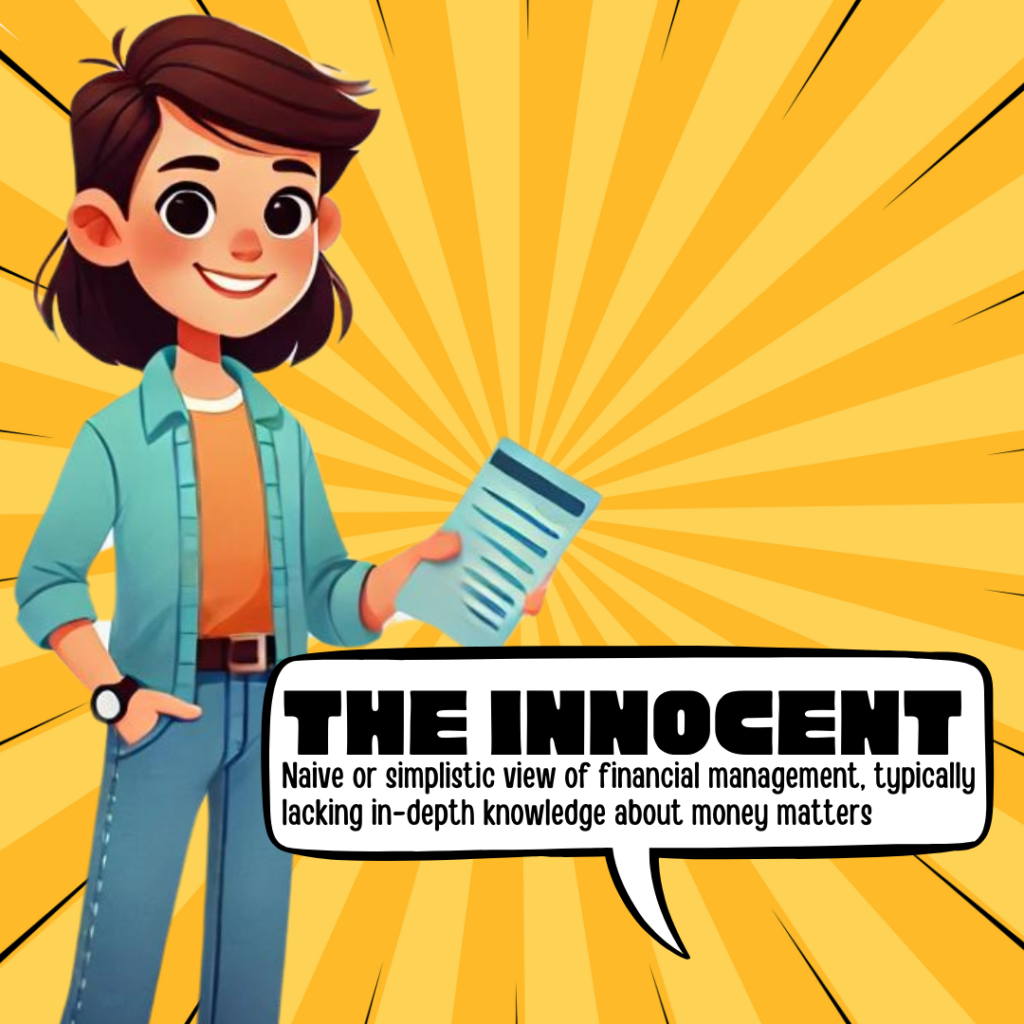
9. The Innocent
The Innocent archetype often has a naive or simplistic view of financial management, typically lacking in-depth knowledge about money matters and sometimes showing disinterest in learning more. Innocents may rely on others to handle their finances and can be overly optimistic about financial outcomes without basis in reality. They tend to avoid the complexities of financial planning, preferring to believe that “things will work out on their own.
Example:
Emily rarely checks her bank statements or balances her chequebook, trusting that her spending habits won’t lead her into trouble. She has little understanding of how interest rates work and thus has never negotiated better terms on her loans or credit cards.
Positive Side:
- Stress-Free Approach: Innocents often experience less stress because they don’t overthink financial issues.
- Trust in Others: They tend to trust professionals and close ones to manage their financial affairs, which can sometimes lead to beneficial guidance.
Negative Side:
- Vulnerability to Fraud: Their lack of attention and knowledge can make them easy targets for financial scams.
- Financial Dependency: They often depend on others for financial management, which can be problematic if that trust is misplaced.
- Inadequate Preparation: Their simplistic approach can lead to lack of preparedness for financial emergencies or future needs like retirement.
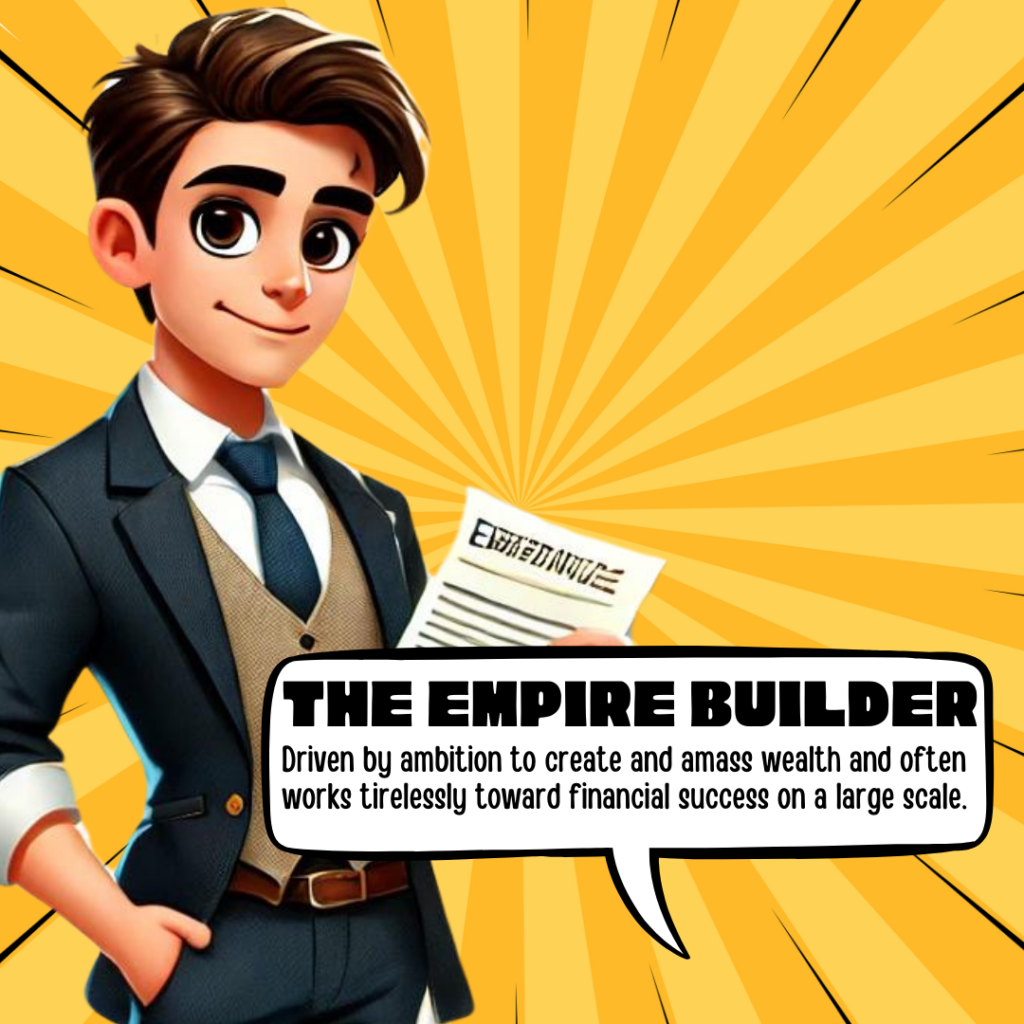
10. The Empire Builder
The Empire Builder archetype is driven by ambition to create and amass wealth and often works tirelessly toward financial success on a large scale. They are strategic, focused, and highly driven, viewing financial growth as a game of skill and tenacity. Empire Builders are often entrepreneurs or high-level executives who are not just seeking to secure their own financial future but also to make a mark and leave a legacy.
Example:
Daniel is an ambitious entrepreneur who has started multiple businesses, always with the goal of scaling them to their maximum potential. He invests heavily in his ventures and is constantly looking for new opportunities to expand his business empire.
Positive Side:
- Wealth Creation: Empire Builders often succeed in creating substantial wealth for themselves and others.
- Innovation and Leadership: They drive innovation and provide leadership, creating jobs and contributing to economic growth.
- Visionary Goals: They are visionaries who can change market landscapes and influence broader economic patterns.
Negative Side:
- Risk of Burnout: Their intense focus and drive can lead to personal burnout and strained relationships.
- High Financial Risk: Their ambitious ventures come with high financial stakes, including the potential for significant losses.
- Pressure and Stress: The pressure to succeed and grow can lead to high levels of stress, impacting personal and professional life.
Recognising and understanding your financial archetype is more than just a tool for introspection—it’s a strategic step towards mastering your financial life. Whether you find yourself resonating with the Innocent’s simplicity or the Investor’s strategic approach, each archetype offers valuable insights into our financial behaviours and preferences. By embracing the strengths and addressing the challenges of our archetypal tendencies, we can tailor our financial planning and decision-making processes to better suit our individual goals and circumstances. Embrace your financial personality and let it guide you to more informed and effective money management.